Bali or Lombok is one of the most common questions travellers face when planning a trip to Indonesia. The two islands sit right next to each other, separated by a narrow strait, yet they offer noticeably different experiences. Bali has decades of tourism infrastructure, a packed calendar of events and a reputation that precedes it. Lombok is quieter, less developed and still largely built around nature rather than nightlife.
Neither island is objectively better. The right choice depends on what you want from your trip. This guide compares Bali and Lombok across the factors that actually affect a holiday, so you can decide with a clearer picture rather than guesswork.
Bali or Lombok, the short answer
If you are short on time, here is the quick version.
Choose Bali if you want a wide choice of restaurants, beach clubs and nightlife, the convenience of ride-hailing apps everywhere, and the option to move between very different areas (Ubud, Canggu, Uluwatu) within a single trip, provided you calculate in extra time for traffic.
Choose Lombok if you want quieter beaches without crowds, a more relaxed pace, better value for accommodation and activities, and easier access to less-visited nature such as Mount Rinjani and the Gili Islands.
Many travellers end up doing both, since a boat or short flight connects the two islands in well under a day. The rest of this guide breaks down why.
Landscape and beaches
Bali's beaches range from black volcanic sand in the north to the white sand stretches around Nusa Dua and Uluwatu. Many of the best-known beaches, particularly around Kuta, Seminyak and Canggu, are lined with cafes, beach clubs and sunbeds. This makes them convenient, but they are rarely quiet.
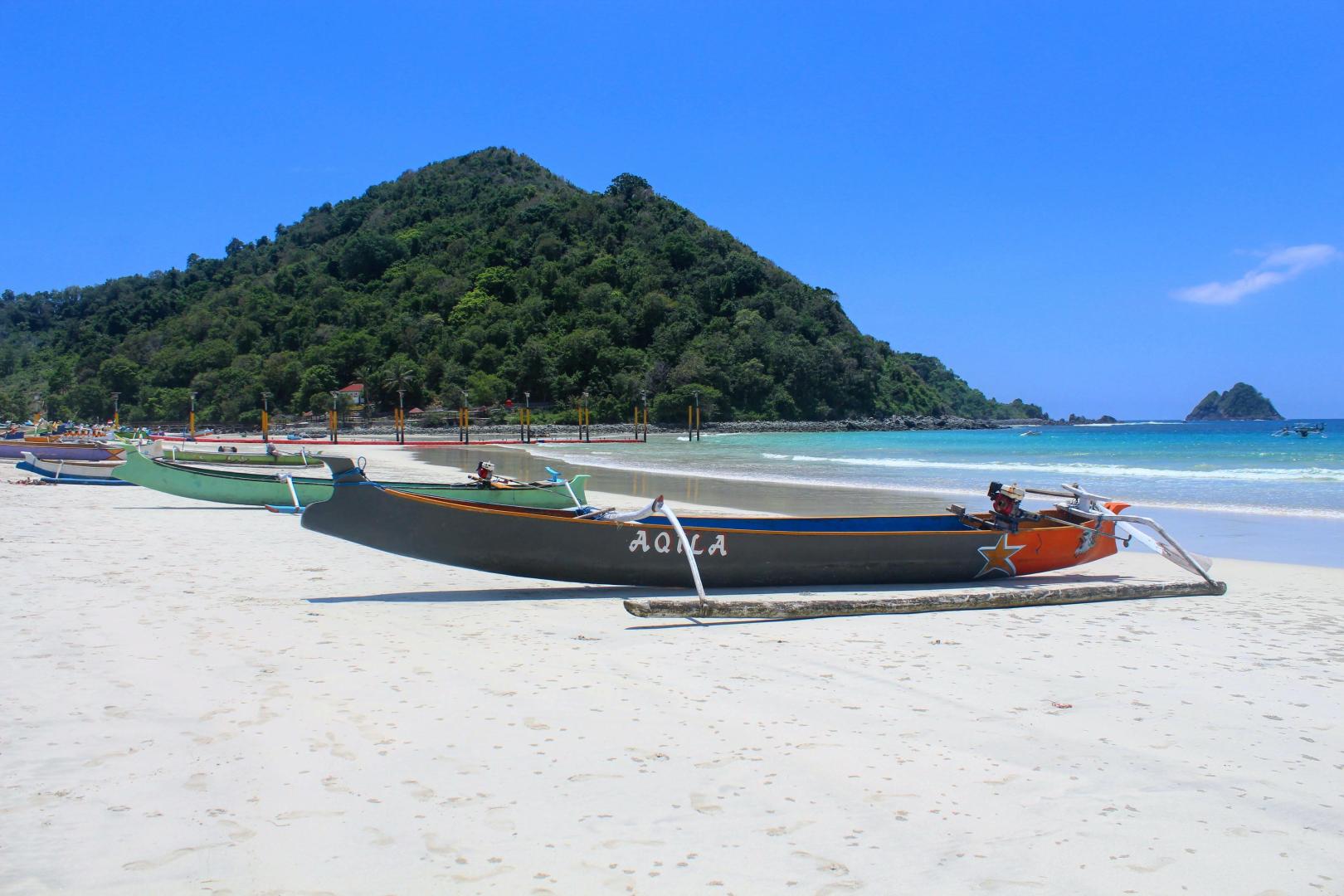
Lombok's coastline has developed more slowly. Lombok's beaches such as Selong Belanak, Tanjung Aan and Mawi remain largely undeveloped, with open stretches of sand and far fewer buildings. There is a pink-sand beach on the island's south-east coast, one of only a handful in the world. Travellers who want beach time without crowds generally find Lombok the better fit.
Both islands have serious mountains. Bali's Mount Batur is a manageable sunrise trek for beginners, while Gunung Agung is a longer and steeper climb. Lombok's Mount Rinjani, Indonesia's second-highest volcano, is a multi-day trek to a crater lake and summit, and is best suited to travellers with proper hiking experience and time to spare.
The strait between the two islands is more than a stretch of water. It marks the Wallace Line, the boundary where Asian wildlife gives way to species more closely related to Australia and New Guinea. In practice, this means the birds and animals you spot on each island are genuinely different rather than the same species with a different backdrop.
Bali has the Bali starling, an endangered white bird found nowhere else in the wild, while Lombok has its own native species, including the Rinjani scops owl. Neither island has the other's monkeys, birds or reptiles in any great overlap, which is a small but interesting detail for travellers who notice wildlife while exploring.
Culture and atmosphere
Bali is predominantly Hindu, and daily life is visibly shaped by that: temple ceremonies, offerings placed outside shops and homes, and processions that can close roads without much notice. Nyepi, the Balinese day of silence, halts the entire island once a year, including the airport.
Lombok's population is majority Muslim, and the island is home to thousands of mosques, which is where its nickname "the island of a thousand mosques" comes from. The Sasak people, native to Lombok, maintain their own traditions, including the Bau Nyale festival held on the south coast around February or March. Travellers interested in a different cultural experience from Bali's Hindu ceremonies will find Lombok's culture distinct rather than a variation on the same theme.
Surfing and water sports
Both islands attract serious surfers, but the experience differs. Bali's breaks around Uluwatu and Canggu are well known internationally and can get crowded in the water, particularly in peak season. Lombok's surf spots see far fewer people in the lineup for a similar quality of wave. Selong Belanak and Kuta Lombok are beginner-friendly with soft sand-bottom breaks, while Desert Point in the island's south-west is regarded as one of the best left-hand waves in the world for experienced surfers.
For diving and snorkelling, Bali's Nusa Penida and surrounding islands offer manta ray and mola mola sightings on scheduled dive trips. Lombok's Gili Islands and Belongas Bay offer similarly rich marine life, including seasonal hammerhead shark sightings, generally with smaller groups and less competition for dive slots.
Nightlife and evening activities
Bali has an established nightlife scene, particularly in Canggu, Seminyak and Uluwatu, with international DJs, beach clubs and a party calendar that runs most of the year.
Lombok is quieter after dark. Lombok's evening scene centres on beachfront bars and sunset spots on the mainland, with Gili Trawangan offering the closest thing to Bali-style nightlife on a smaller scale. This is not a shortcoming for every traveller. Those planning a trip around relaxation rather than late nights often prefer Lombok specifically because there is less pressure to be out.
Food and dining
Balinese cuisine often features pork, given the island's Hindu population, alongside a large and varied international food scene shaped by decades of tourism. Restaurants range from local warungs to fine dining, particularly in Ubud and Seminyak.
Lombok's food, shaped by its Muslim majority, is built around beef, chicken and seafood rather than pork. Ayam taliwang, a grilled and spiced chicken dish, and sate rembiga are local specialities worth seeking out. The dining scene is smaller than Bali's and skews toward local warungs rather than an extensive international restaurant strip, though this is changing gradually in areas such as Kuta Lombok.
Crowds, traffic and pace of travel
This is one of the clearest differences between the two islands. Bali's roads carry far more traffic than the network was built for, and short journeys in areas like Canggu or Seminyak can take far longer than the distance suggests. A weekday morning trip of just a few kilometres can easily take over an hour, and this is not limited to peak season.
Lombok has considerably less traffic, though the trade-off is that accommodation and attractions are more spread out, so journeys can still take time, just without the congestion. Roads on Lombok are generally in decent condition on main routes, less so on smaller village roads.
Cost of travel
Bali's long tourism history means prices vary enormously, from backpacker-friendly to genuinely high-end, often within the same neighbourhood. Because competition is intense, deals can be found, but popular areas also carry a premium.
Lombok tends to offer better value for a comparable standard of accommodation and activities, largely because the island has fewer visitors and less demand pressure on prices. This is particularly noticeable with private villas, surf lessons and boat trips, which often cost less than equivalent options in Bali.
Accessibility and getting between the islands
Lombok International Airport receives direct flights from several Indonesian cities and a growing number of international routes, though Bali's Ngurah Rai Airport remains the busier and more internationally connected hub.
Travelling between the two islands is straightforward. A fast boat between Bali and the Gili Islands or Lombok's mainland ports takes around two to five hours depending on the route and sea conditions, while a direct flight covers the distance in around 40 minutes. Many travellers combine both islands in a single trip rather than choosing one over the other.
Accommodation
Bali's accommodation scene is vast, covering everything from hostels to five-star resorts, concentrated in dense tourist hubs. This means plenty of choice, but also plenty of competition for the best-located or best-value properties.
Lombok has fewer options overall, spread more thinly across the island, which usually means quieter surroundings, for instance in Tetebatu, and easier access to nearby beaches without the density found in Bali's main tourist areas. Amazing Lombok Resort, set among the hills near Selong Belanak in South Lombok, offers this kind of quieter base within easy reach of several of the island's best beaches and surf spots.
What tourists should know
A few practical points get missed in most Bali or Lombok comparisons:
- Lombok is more conservative than Bali. Modest dress is appreciated away from beaches and resorts, particularly near mosques and villages.
- ATMs and card payment are less common outside the main towns in Lombok. Carry more cash than you would in Bali.
- Mobile data coverage on Lombok can be patchy in mountainous or remote coastal areas, unlike most of Bali's tourist zones.
- Ramadan affects daytime dining availability more noticeably in Lombok than in Bali, given the difference in religious majority.
Common mistakes when choosing between Bali and Lombok
Some travellers assume Lombok is simply "a quieter Bali" and expect the same range of restaurants, activities and infrastructure at a smaller scale. Lombok is genuinely different in pace and culture, not just a scaled-down version of its neighbour.
Others try to fit both islands into a very short trip, spending most of the holiday in transit rather than exploring either one properly. If time is limited, it is usually better to commit to one island and do it well, or allow at least three to four days on each side if combining both.
Best time to visit
Both islands share the same broad seasons. The dry season, roughly April to October, brings the most reliable weather and is the busiest period on both islands. The wet season, from November to March, sees more rain but fewer crowds and lower prices, and is often a good time to visit Lombok in particular, since infrastructure is less affected by rain than in some parts of Bali.
Conclusion
Bali and Lombok sit close together geographically but offer genuinely different holidays. Bali suits travellers who want variety, nightlife and established infrastructure, while Lombok suits those looking for quieter beaches, lower prices and a slower pace of travel. Many visitors find the best answer is not to choose one over the other, but to combine both, since getting between them is fast and straightforward.
For the Lombok half of that trip, staying in South Lombok near Selong Belanak puts you within easy reach of the island's best surf beaches, the Gili Islands boat crossings and Mount Rinjani, while offering a calmer base than the busier parts of Bali.
All About Lombok Articles
Last updated on: 28 August 2026