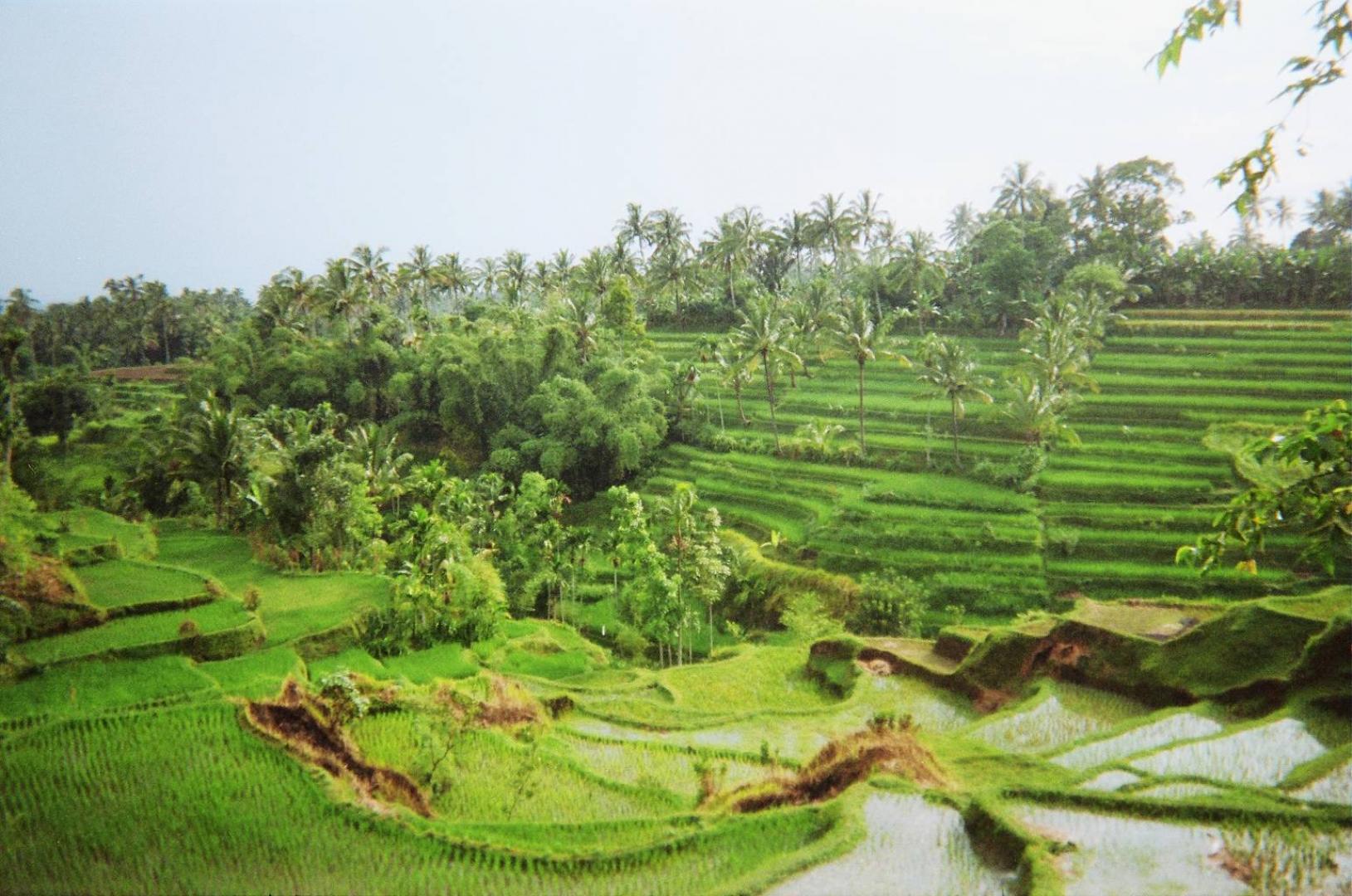
Most first-time visitors to Lombok picture beaches first. Tetebatu Lombok is the reason to look inland too. Set on the southern slopes of Mount Rinjani in East Lombok, this hillside village trades sand for rice terraces, waterfalls and cooler mountain air. It's a good fit for travellers who want a slower, greener side of the island alongside their beach days.
This guide covers what Tetebatu Lombok actually offers, what to expect on the ground, and how to fit it into a wider Lombok trip.
What is Tetebatu Lombok?
Tetebatu is a highland village in the Sikur sub-district of East Lombok, roughly central on the island and close to the border of Mount Rinjani National Park. Its elevation keeps temperatures noticeably cooler than the coast, and the surrounding landscape is dominated by terraced rice fields, clove and coffee plantations, and dense tropical forest.
The village gained wider recognition in 2021, when it was selected to represent Indonesia at the UNWTO Best Tourism Villages competition, alongside two other Indonesian villages. The nomination reflected its traditional houses, farming practices and community-run tourism, rather than any single attraction.
Why visit Tetebatu
Tetebatu works well as a contrast to a beach-based Lombok itinerary. Instead of surf and sunbathing, the appeal here is walking through working rice terraces, visiting waterfalls fed by Rinjani's slopes, and seeing how rural Sasak communities farm and craft. It also gives access to one of the lesser-used starting points for a Mount Rinjani trek, for travellers who want the mountain without joining the busier Senaru or Sembalun routes.
Highlights of Tetebatu
Rice terraces and the eco farm
Walking through Tetebatu's rice terraces is the simplest and most rewarding activity in the village. Paths cut between paddies and irrigation channels, with Rinjani often visible in the background on clear mornings. Several eco farms in the area let visitors see how traditional Lombok coffee and coconut oil are made by hand, and buy small batches of spices and coffee produced locally.
Waterfalls near Tetebatu
The area around Tetebatu has several waterfalls, including Ulem-ulem, Sarang Walet, Tibu Topat and Tibu Bunter. Benang Kelambu is generally considered the most impressive, with multiple curtains of water dropping through thick vegetation. It's a reasonable trekking destination in its own right, and a good spot to cool off after walking. For a broader look at waterfalls elsewhere on the island, our Lombok waterfalls guide covers the more accessible northern options.
Mount Rinjani trekking from Tetebatu
Mount Rinjani is Indonesia's second-highest volcano, at 3,726 metres above sea level. Tetebatu is one of several villages with its own trekking route up the mountain, alongside better-known starting points such as Senaru and Sembalun. Reaching the summit typically takes three to four days including camping, though shorter treks along the lower trails can still take in caves, rivers and waterfalls without the full ascent. Because of Rinjani's height and the logistics involved, hiring a registered guide and porter is standard practice, not just for safety but because permits and route knowledge are required. Our full Mount Rinjani trekking guide covers preparation, cost and what to pack in more detail.
Pringgasela weaving village
A short drive from Tetebatu, Pringgasela is known for traditional Lombok weaving. Local women produce woven cloth using bamboo tools and patterns specific to the region, and visitors can watch the process and buy pieces directly. It pairs naturally with a Tetebatu day trip, since both focus on traditional Sasak craft and rural life rather than beaches.
Tetebatu Monkey Forest
Tetebatu Monkey Forest is home to long-tailed macaques and the rarer black lutung monkey. A walk through the forest usually combines with passing through smaller villages, rice fields and streams, making it a reasonable half-day activity for travellers who want to see wildlife alongside the scenery rather than as a standalone stop.
What tourists should know
- It's noticeably cooler than the coast. Bring a light layer, especially for early mornings or waterfall visits.
- Distances between attractions add up. Waterfalls, the weaving village and the monkey forest are spread across the area, so a car or scooter with a driver who knows the roads is more practical than trying to walk between them.
- Guides matter for waterfall trails. Paths to some waterfalls involve uneven terrain and river crossings. A local guide keeps things straightforward and usually knows current conditions.
- This is not a party destination. Tetebatu suits travellers looking for quiet, nature and culture rather than nightlife or beach clubs.
- Mobile signal can be patchy in parts of the village and on trekking routes, so download offline maps in advance.
Practical information
Most attractions around Tetebatu charge a small entry or donation fee, generally collected at the village or waterfall entrance. Facilities are basic but present at the main waterfalls, with parking, simple food stalls and toilets. For Rinjani trekking specifically, tours, porters and guides are widely available in the area given the volume of domestic and international interest in the route.
Best time to visit Tetebatu
The dry season, roughly April to October, is the most reliable time to visit. Trails are easier to walk, waterfalls remain accessible, and Rinjani trekking conditions are generally safer and more comfortable. The wet season can still work for a shorter visit focused on the rice terraces and eco farms, since rain tends to fall later in the day, but multi-day treks become more difficult and some trails may close. For a wider view of how the seasons affect the rest of the island, see our guide to the best time to visit Lombok.
How to get to Tetebatu
Tetebatu sits inland in East Lombok, which means it's a proper drive from almost anywhere on the coast. From South Lombok, including the Selong Belanak area, plan for around 1.5 to 2 hours by car, depending on traffic and the exact route. A private driver or arranged transfer is the most practical option, since public transport does not run reliably into the village. If you're arriving in Lombok for the first time, our guide on how to get to Lombok covers flights, boats and ferries from Bali before you get to the inland roads.
Where to stay
Tetebatu has a small selection of local guesthouses and cottages for travellers who want to stay overnight in the hills, which suits an early start on a Rinjani trek or a longer waterfall day. Most visitors, however, treat Tetebatu as a day trip from a coastal base and return to the beach in the evening. Staying at Amazing Lombok Resort in Selong Belanak works well for this pattern, combining easy access to South Lombok's beaches with a manageable day trip inland when you want a change of scenery.
Planning your visit
Tetebatu is not the easiest add-on to a short Lombok trip, given the drive involved, but it's one of the more rewarding for travellers who want more than beaches. Rice terrace walks, waterfalls and a genuine Rinjani trekking route make it a strong half-day or full-day option, and pairing it with Pringgasela or the monkey forest turns it into a fuller cultural day out. If you're building a longer route around the island, our Lombok itinerary guide shows where a Tetebatu day fits alongside beaches, surfing and other villages such as Sade. A few extra days on the island, split between the coast and the hills, gives a much fuller picture of what Lombok has to offer than a beach-only visit.
All Destination Articles
Last updated on: 11 September 2026