Paying in Lombok is easy once you know what to expect. The island is more cash based than Bali. Cards work in hotels, larger restaurants and shopping malls, but small warungs, beach vendors, drivers and village markets expect rupiah notes.
This guide explains when to use cash, cards or QRIS, how ATMs work and how to avoid common fees. It is written for first-time visitors, with local tips for travellers staying in the south of Lombok.
What currency is used in Lombok?
Lombok uses the Indonesian rupiah (IDR), the same currency as the rest of Indonesia. Prices are almost always shown in rupiah. Some dive centres, tour operators and villas quote in euros or US dollars, so ask which currency applies before you confirm anything.
The numbers look big at first. A meal can cost tens of thousands of rupiah, and a scooter rental is often priced in the tens of thousands per day. When you start converting, you'll notice that big numbers can easily be reduced to small ones. These are roughly the rates at the moment of writing:
- EUR 1 --> IDR 20,000
- USD 1 --> IDR 18,000
- AUD 1 --> IDR 12,000
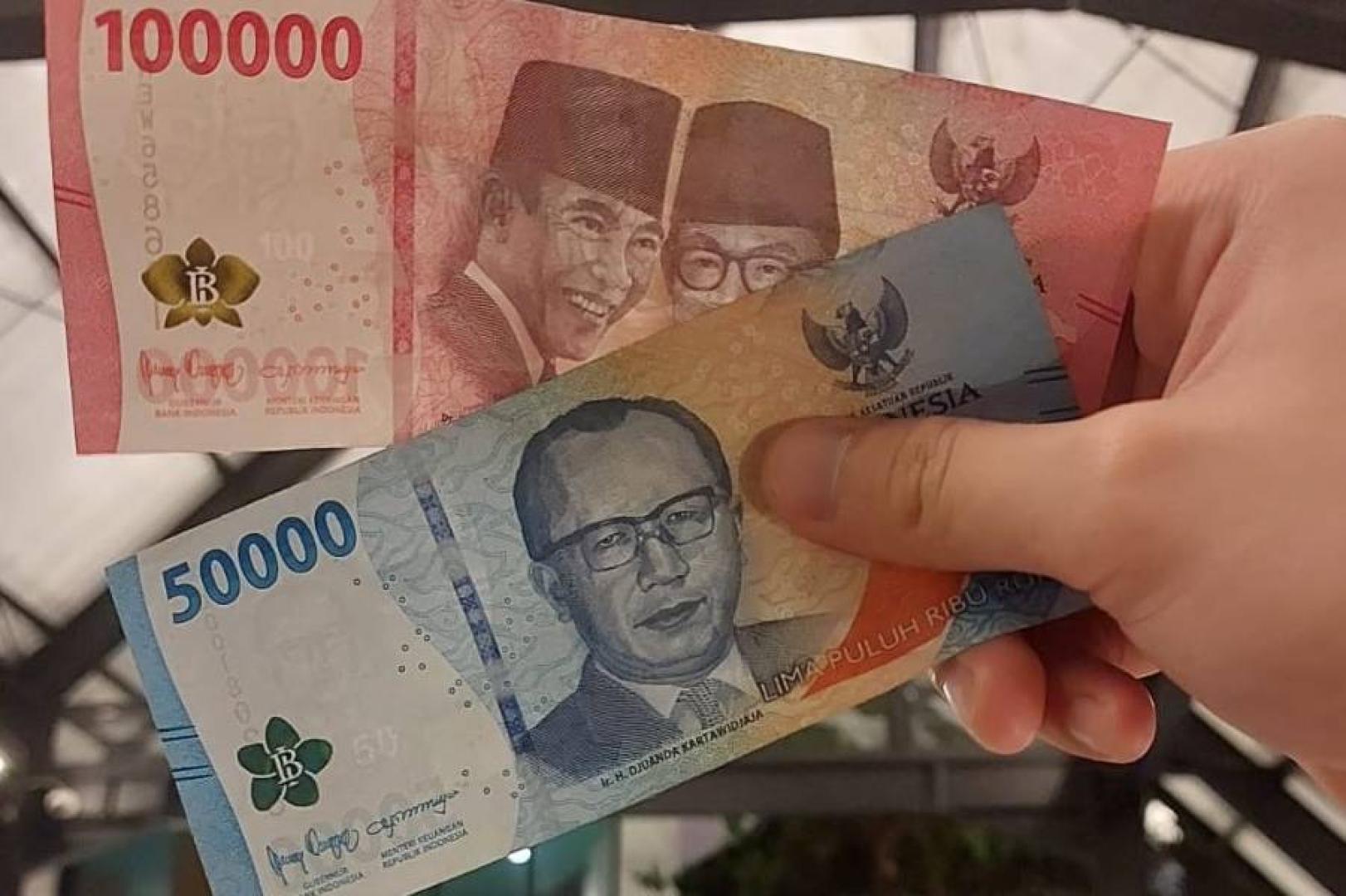
Another tip is to learn the colours of the main notes, because IDR 10,000 and IDR 100,000 are easy to mix up when you are tired. The IDR 100,000 note is pinkish red, the IDR 50,000 note is blue, the IDR 20,000 note is green and the IDR 10,000 note is purple.
For an idea of what everyday items cost, see our guide to food cost in Lombok.
Paying in Lombok with cash
Cash is still the most useful way to pay outside the main tourist areas. You will need it for many small, everyday purchases, including the following.
- Warungs, markets and street food stalls
- Parking attendants and local drivers
- Scooter rental and fuel even at petrol stations
- Beach loungers, drinks and snacks from small vendors
- Entrance fees and donations at small attractions and villages
Carry plenty of small notes. Many vendors cannot change a IDR 100,000 note early in the morning, and some will simply say they have no change.
Using cards in Lombok
Visa and Mastercard are accepted at most hotels, larger restaurants, supermarkets, dive centres and the shopping malls in Lombok. American Express is less common. In towns such as Kuta, many cafes and restaurants take cards, but some add a surcharge of a few percent.
Card machines depend on a mobile signal, and the signal can drop in rural areas. Always keep some cash as a backup, even if you plan to pay by card most of the time.
Dynamic currency conversion
Card terminals and ATMs sometimes offer to charge you in your home currency instead of rupiah. This is called dynamic currency conversion, and it usually gives you a worse exchange rate. Choose to pay in rupiah and let your own bank do the conversion.
ATMs in Lombok
ATMs are easy to find in Mataram, Senggigi and Kuta. Small villages often have none, so it is wise to withdraw cash before you head to quieter beaches. Use machines inside bank branches or malls where possible, as they are safer and better maintained.
Foreign cards usually attract fees at several levels. The ATM operator often charges a fee, commonly IDR 20,000 or IDR 25,000 per withdrawal. Your own bank may add a foreign transaction fee on top of that.
Many ATMs limit each withdrawal to IDR 2.5 million or IDR 3 million (if they pay in IDR 100k bills). This means you may need several withdrawals to get the amount you want, and each one can carry a fee. A few tips can help.
- Check your home bank's daily limit for overseas withdrawals before you travel
- Tell your bank you will be using your card in Indonesia
- Withdraw larger amounts less often instead of small amounts every day
- Read the screen for the ATM fee before you confirm
- Cover the keypad when you enter your PIN
QRIS and e-wallets in Lombok
You will see small black, red and white QR code stickers at many shops, cafes, warungs and even parking spots. This is QRIS, the national QR payment standard. Most locals pay by scanning the code with a banking app or e-wallet.
Visitors from some countries can use their own payment apps through cross-border QRIS. At the time of writing, partner countries include Malaysia, Thailand, Singapore, Japan, South Korea and China. You scan the merchant code and enter the amount in rupiah. Bank Indonesia explains how cross-border QRIS works on its website.
If your country is not on the list, some travellers link a foreign card to a local e-wallet app. This depends on the app and on your card, so check it works before you rely on it. Treat QRIS as a bonus and keep cash as your main plan.
Exchanging money in Lombok
You can exchange cash at authorised money changers in Kuta, Mataram and Senggigi. Look for a proper shop with the rates displayed clearly. A rate that looks much better than everywhere else is usually a warning sign.
Count your notes carefully by yourself in your hands before you leave the counter. Bring clean, undamaged foreign notes, as torn or marked bills are often refused. A sensible plan is to exchange a small amount on arrival, then withdraw or exchange more once you are settled.
What tourists should know
Menus in hotels and many restaurants may show prices excluding tax and service charge. This can add a noticeable amount to the final bill, so check the small print before you order. Tipping is appreciated but not expected.
Bargaining is normal at markets and with beach sellers, but not in shops with fixed prices. Keep it friendly and polite. When you hand over money, use your right hand, as described in our guide to etiquette in Indonesia.
Shops and drivers may refuse notes that are torn, dirty or heavily creased. Check your change as you receive it and swap any damaged notes straight away.
Common mistakes to avoid
- Relying only on cards and arriving in a village with no cash
- Withdrawing small amounts again and again and paying the fee each time
- Accepting the conversion into your home currency at the ATM or card machine
- Carrying only IDR 100,000 notes and having no change for small purchases
- Misreading the zeros and overpaying for a simple item
- Forgetting to tell your bank about your trip, which can lead to a blocked card
How this compares with Bali
Bali has more ATMs, more card terminals and more QRIS stickers, especially in busy tourist areas. Lombok is quieter, so cash matters more once you leave Kuta, Senggigi and the main towns. If you are weighing up the two islands, our guide to Bali or Lombok covers the wider differences.
Where to stay and how to plan your cash
Amazing Lombok Resort is in Serangan, close to Selong Belanak. The nearest bigger town with several ATMs is about 30 to 40 minutes away by car, so it helps to arrive with some rupiah in your wallet. The team can point you to the nearest ATM and money changer when you arrive.
Conclusion
Paying in Lombok works best with a mix of cash, a card and QRIS if possible. Carry small notes for warungs, markets and drivers, use your card in hotels and larger restaurants, and always pay in rupiah. Withdraw cash in town before you head to quieter beaches.
Spending a few extra days on the island gives you time to settle into this rhythm. Staying in the south of Lombok, for example at Amazing Lombok Resort, gives you easy access to beaches such as Selong Belanak while keeping you away from the busiest tourist areas.
All About Lombok Articles
Last updated on: 27 November 2026