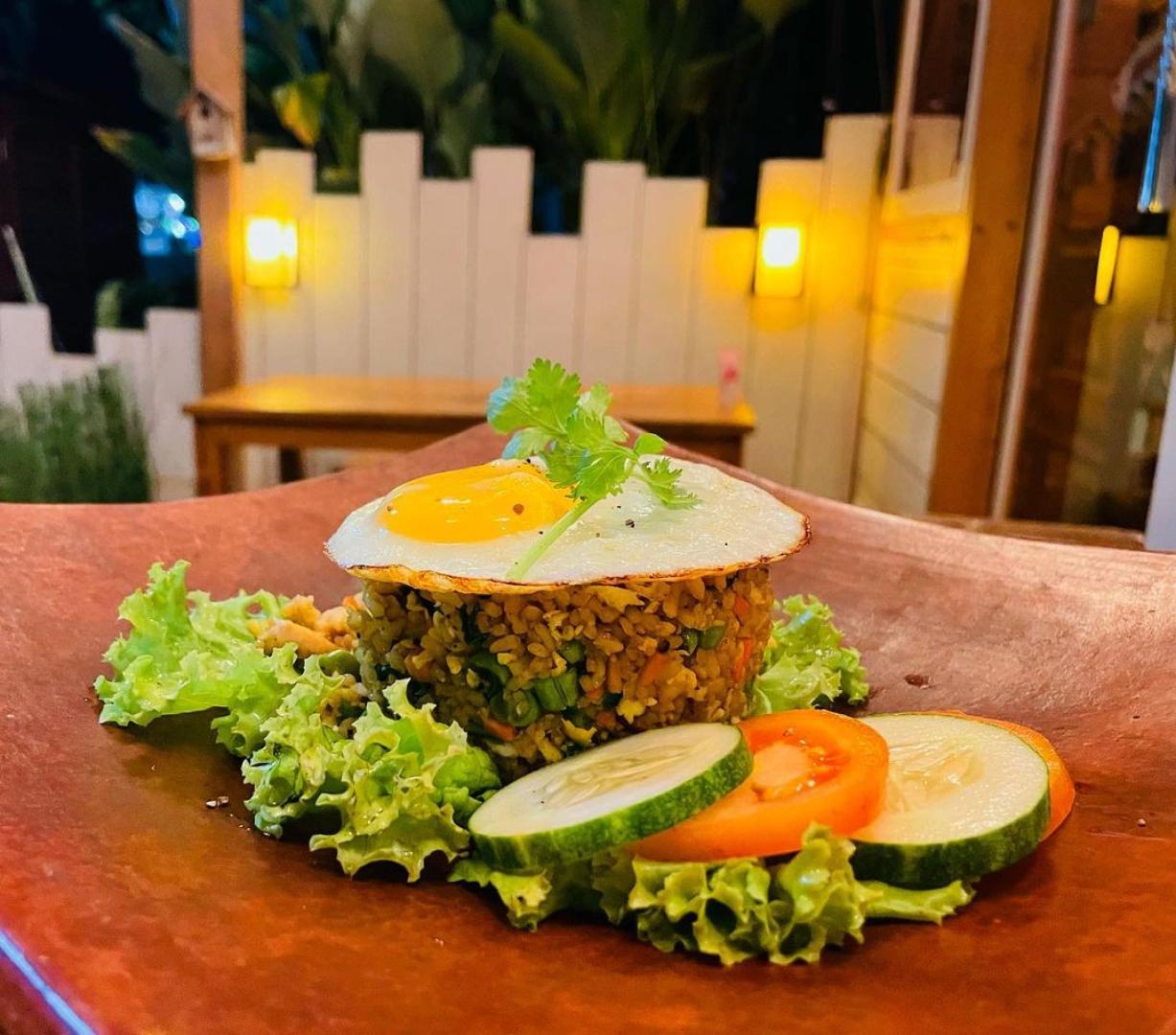
The food cost in Lombok depends heavily on where you eat. Just like in Bali, some areas are more expensive than others, and the type of restaurant makes a big difference too.
To eat in Lombok, you'll find everything from low cost traditional restaurants to upscale dining. Below is a breakdown of what to expect, along with tips for reading menu prices correctly.
Not all local food is cheaper
It should be emphasised that local Lombok food and Lombok restaurants are not necessarily cheaper, and not all local food is low quality. Some of Lombok's local specialities are made from quality beef and fresh seafood.
Eating at a small local restaurant, or warung, is a good option for a budget holiday, and buying food from a stall by the road is even cheaper. There are a few things worth knowing first, though.
Local food tends to use far more spices and stronger flavours than most visitors are used to, including genuinely spicy dishes. If you've only tried local food at a tourist restaurant, keep in mind the spice and herbs are usually toned down there. The authentic version at a small, local restaurant can taste quite different, since their main customers are local people rather than tourists.
Different budgets for different restaurants
The cost of living in Indonesia, and food costs in Lombok generally, are relatively low compared to most European or American countries. Even at a fancy-looking restaurant in a busy tourist area, you'll typically spend IDR 200k to 300k (USD 11-17 | AUD 16-24 | EUR 10-14.5) per person.
At an average restaurant in Kuta Lombok, expect to pay IDR 100k to 150k (USD 5.6-8.4 | AUD 8-12 | EUR 4.9-7.3) per person. In Mataram, food is cheaper, with prices between IDR 40k to 75k (USD 2.2-4.2 | AUD 3.2-6 | EUR 2-3.6). On the Gili islands, food costs rise again, to between IDR 75k to 125k (USD 4.2-7 | AUD 6-10 | EUR 3.6-6) at the average restaurant.
Lombok, particularly the Kuta area and the Gilis, has plenty of restaurant variety from various corners of the world. So if you're missing your own country's comfort food, you should be able to find it.
What tourists should know
A few practical things make it easier to read a Lombok menu correctly and avoid surprises on the bill:
- Watch for the "++" symbol. Many upscale restaurants and hotel restaurants add tax and a service charge on top of the listed menu price, often shown as "++" next to a dish or as a note on the bottom of the menu. Together these can add roughly 20% to your bill, so it's worth checking before you order if the total matters to you.
- Cash is still useful. Warungs and roadside stalls are usually cash only. Restaurants in Kuta, Senggigi and Mataram generally accept cards, but it's sensible to carry cash for smaller places and the Gili islands, where card terminals are less reliable.
- Bargaining is for markets, not menus. You can bargain at a traditional market when buying fruit or vegetables, but restaurant and warung menu prices are fixed.
- Portion sizes vary. A warung portion is often smaller than what you'd expect from a Western main course, so two dishes shared between one person is common for a fuller meal.
Common mistakes to avoid
- Comparing Gili prices to mainland prices. Everything on the Gili islands, including food, has to be brought over by boat, so prices are naturally higher there. It isn't overcharging, it's the cost of getting supplies to the islands.
- Judging a restaurant by its appearance. A simple-looking warung can serve excellent food, while a smart-looking restaurant doesn't always mean better quality.
- Skipping local specialities to save money. Dishes like ayam taliwang or plecing kangkung are often inexpensive and give a far more authentic taste of Lombok than imported alternatives.
- Assuming a menu price is the final price. Always check for "++" pricing or a note at the bottom of the page before ordering at nicer restaurants, especially in Senggigi and the Gilis.
Grocery shopping
If you're staying somewhere with a kitchen, like Villa Atas Pelangi, cooking your own meals is an option. Imported food in Lombok is expensive and not always easy to find, including quality bread, since the Indonesian staple food is rice. Specialised places like the Breakery in Kuta are worth knowing about if you need this.
Grocery supermarkets are open daily, including holidays. Fresh local vegetables and fruit are relatively cheap, and if you shop at a traditional market, you can bargain on the price.
Food delivery apps
If you're staying on the main island, in areas such as Mataram, Kuta, Senggigi or Mandalika, food delivery apps are widely available. Grab and Gojek are the two most popular online taxi and delivery apps in Indonesia, and many restaurants also let you order directly.
Delivery and admin fees are fairly low, typically an extra IDR 10k to 40k (USD 0.5-2.2 | AUD 0.88-3.2 | EUR 0.5-2) on top of your order. You can usually pay by card, e-money, or cash on delivery.
Don't forget, you're on holiday
Reducing food costs in Lombok is a sensible habit, but remember you're on holiday too, so enjoying a few culinary treats should be on your list. For local dishes with a modern touch, try Roemah Langko in Mataram. For something more memorable, Bluefin Seafood Lombok is a floating restaurant out on the water, and makes for a unique restaurant experience.
If you'd rather eat without worrying whether it suits your taste, the Amazing Lombok Restaurant is a reliable option, with a menu ranging from local dishes to international favourites, including for breakfast.
All Eat in Lombok Articles
Last updated on: 04 September 2026